As I get older I find simple explanations are often the most useful for understanding the world. I guess that’s what you get for chasing simple products for twenty something years. At the moment I mostly work in the B2B space helping companies make better tools.
What is a tool? A tool is something that extends our natural human abilities.
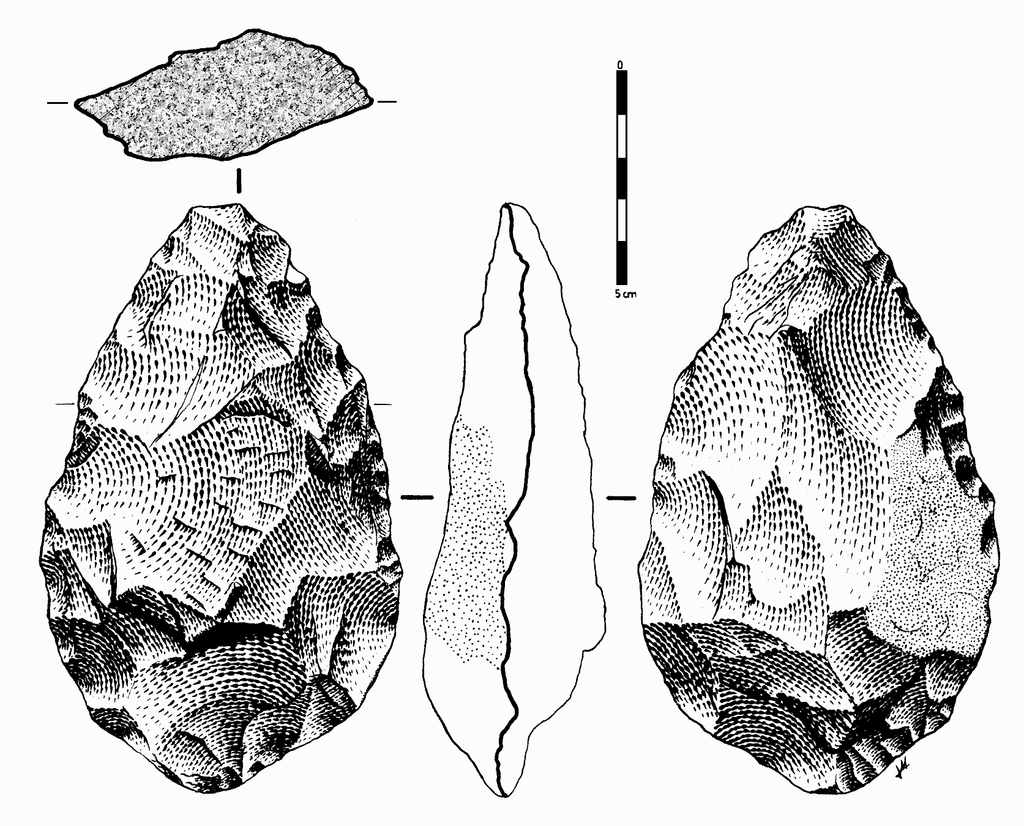
Three million years or so ago our distant ancestors realised that bashing things with a sharp stone gave them new abilities for making lunch. The stone was an extension of their hands. A little while later attaching sharp stones to a sticks to make spears literally extended our abilities to hunt for lunch and commit violence. (Tools for extending violence have been well invested in ever since.)
We can make a mark with our fingers. We can make a mark with a rock or charcoal. A stylus. A quill pen, fountain pen, printing press, typewriter, MS Word. Word is a very sophisticated version of a caveman making proto-symbols in the dirt. It’s a tool.
Tools are extensions of our bodies and minds. In turn change how we interact with and perceive the world (and beyond). As we design tools, understanding the raw human abilities that are extending for our users is a key step in creating a clear and usable mental model. (We don’t usually need to go back millennia; I normally draw the line at XEROX Parc 😉 )
The corollary: if something doesn’t extend our abilities, it’s not a tool. It might be entertainment, or a service, something else.
Image from Wikipedia